


How to Choose the Right Wood Pellet Mill for Your Business
12 Oct - 2026
How to Choose the Right Wood Pellet Mill for Your Business
Choosing the right wood pellet mill is an important decision for any business planning to produce biomass fuel pellets. The machine you select can directly affect production capacity, pellet quality, energy consumption, operating costs, and long-term reliability.
However, selecting a pellet mill involves much more than comparing machine prices or motor power. Your raw materials, required output, pellet specifications, operating hours, and complete production process should all be considered.
This guide explains the key factors to evaluate when choosing an industrial wood pellet mill.
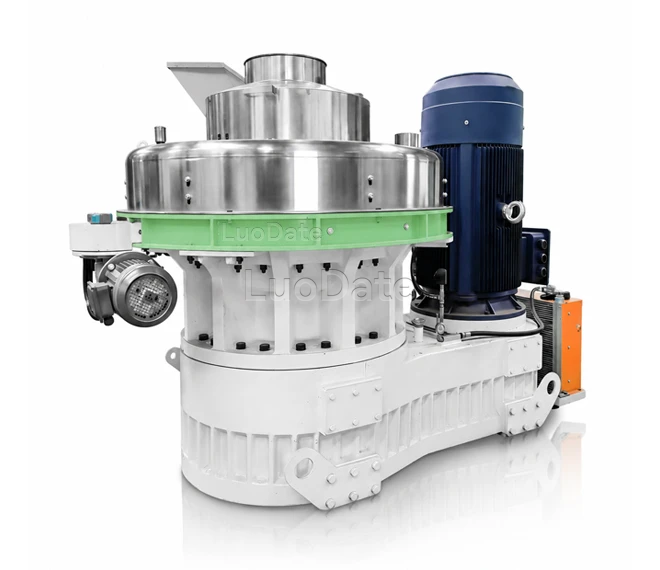
Industrial ring die wood pellet mill for commercial biomass pellet production.
1. Determine Your Required Production Capacity
Production capacity is one of the first factors to consider when choosing a wood pellet mill.
Before selecting equipment, determine how many tons of finished pellets you need to produce per hour, per day, and per year.
For example, a plant targeting 24 tons of finished pellets during eight operating hours would require an average production rate of approximately 3 tons per hour.
Actual equipment selection should also consider maintenance downtime, variations in raw materials, operating efficiency, and potential future expansion.
When determining capacity, consider:
-
Required hourly pellet output
-
Daily operating hours
-
Available raw material supply
-
Expected operating efficiency
-
Future production expansion
For commercial biomass pellet production, industrial ring die pellet mills are commonly used for continuous production.
Explore LUODATE's Wood Pellet Production Line solutions.
2. Evaluate Your Raw Materials
Raw material characteristics can significantly affect pelletizing performance.
Common biomass materials include:
-
Wood sawdust
-
Wood chips
-
Wood shavings
-
Agricultural straw
-
Rice husks
-
Cotton stalks
-
Palm residues
Moisture content, particle size, bulk density, and fiber characteristics all influence the pelletizing process.
Wood chips, for example, normally require size reduction before pelletizing. Materials with excessive moisture may require drying before they enter the pellet mill.
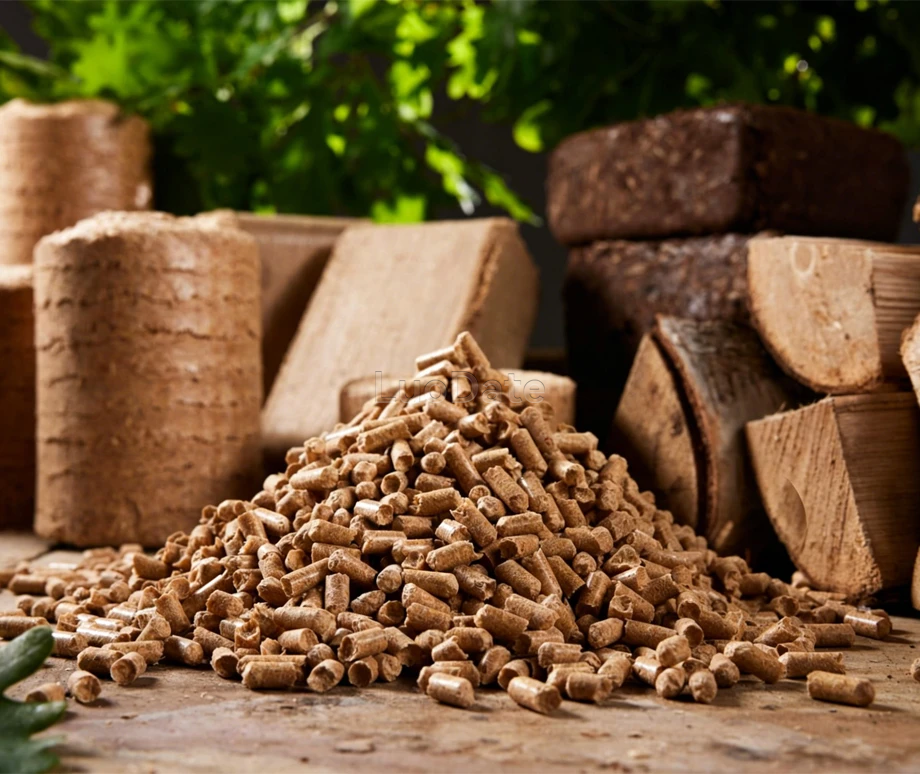
Wood-based biomass materials and finished pellets for biomass fuel production.
When discussing a project with an equipment manufacturer, provide detailed information about your raw materials.
Whenever possible, representative raw material samples can also be used for pelletizing tests before the final equipment configuration is determined.
3. Choose the Right Pellet Mill Technology
Two commonly discussed pellet mill configurations are flat die and ring die pellet mills.
Flat Die Pellet Mills
Flat die machines are generally associated with smaller-scale production and applications where relatively compact equipment is required.
They may be suitable for limited output requirements or certain small-scale applications.
Ring Die Pellet Mills
Ring die pellet mills are widely used in commercial and industrial biomass pellet production.
They are designed for higher production requirements and continuous operation.
For medium- and large-scale wood pellet manufacturing, a properly configured ring die pellet mill is therefore often the more appropriate solution.
The final selection should still be based on your raw material, target output, pellet specifications, maintenance requirements, and complete production process.
4. Consider Power and Energy Consumption
Motor power is an important specification, but higher motor power does not automatically mean better production efficiency.
A more useful indicator is the amount of electricity required to produce each ton of finished pellets.
A simple calculation is:
Specific Electricity Consumption (kWh/t) = Electricity Consumed (kWh) ÷ Finished Pellet Output (t)
Actual energy consumption varies according to raw materials, operating conditions, equipment configuration, and production efficiency.
When comparing equipment, ask suppliers for operating data under comparable production conditions.
It is also important to distinguish between the electricity consumed by the pellet mill itself and the total energy consumption of the complete production line.
5. Define Your Pellet Requirements
The required pellet specifications depend on the intended application and target market.
Before selecting equipment, determine:
-
Required pellet diameter
-
Pellet durability requirements
-
Acceptable fines content
-
Finished pellet moisture
-
Required production consistency
The ring die configuration plays an important role in pellet dimensions and compression behavior.
However, pellet quality is not determined by the pellet mill alone. Raw material preparation, moisture control, operating conditions, cooling, and screening also affect the final product.
6. Consider the Complete Wood Pellet Production Line
A pellet mill is the core forming machine, but it is only one part of a complete biomass pellet manufacturing system.
Depending on the raw material and project requirements, a typical process may include:
Wood Chipping → Drying → Grinding → Pelletizing → Cooling → Screening → Packaging
Not every project requires exactly the same process.
For example, a factory processing prepared sawdust may require less size reduction than a plant processing logs, branches, or larger wood residues.
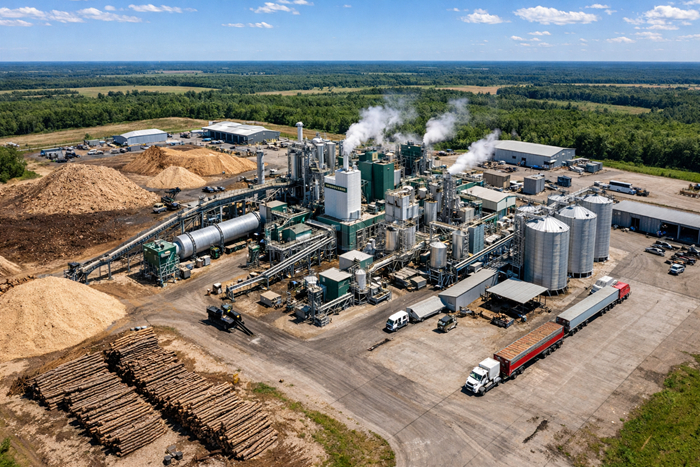
Example of a large-scale industrial wood pellet production plant with integrated material handling, processing, and storage systems.
The capacities of individual machines must also be properly matched.
An undersized dryer, hammer mill, cooler, or conveying system can restrict the capacity of the entire production line even when the pellet mill itself has sufficient output.
Learn more about LUODATE's Biomass Pellet Production Solutions.
7. Evaluate Maintenance and Technical Support
Initial machine performance is important, but long-term reliability also depends on maintenance and technical support.
Before choosing a pellet mill supplier, consider:
-
Recommended maintenance procedures
-
Ring die and roller replacement
-
Spare parts availability
-
Installation and commissioning
-
Operator training
-
Technical troubleshooting support
Wear parts should also be considered when estimating long-term operating costs.
Preventive maintenance and proper spare-parts planning can help reduce unexpected production interruptions.
8. Avoid Common Pellet Mill Selection Mistakes
Choosing Equipment Based Only on Price
The lowest initial purchase price does not necessarily result in the lowest long-term production cost.
Ignoring Raw Material Characteristics
Different biomass materials may require different preparation processes and equipment configurations.
Focusing Only on Maximum Capacity
Rated maximum capacity should not be treated as guaranteed continuous output under every operating condition.
Neglecting Auxiliary Equipment
Grinding, drying, conveying, cooling, screening, and packaging equipment must be correctly matched with the pellet mill.
Ignoring Future Expansion
If production demand is expected to increase, consider whether the plant layout and equipment configuration can accommodate future capacity expansion.
Frequently Asked Questions
What type of pellet mill is suitable for commercial wood pellet production?
Industrial ring die pellet mills are commonly used for commercial wood pellet manufacturing because they are suitable for continuous production and higher throughput requirements. The appropriate machine should be selected according to raw materials, required capacity, and operating conditions.
Can one biomass pellet mill process different raw materials?
Many biomass pellet mills can process different biomass materials, but pretreatment requirements and operating settings may vary. Raw material characteristics should therefore be evaluated before determining the final equipment configuration.
How much electricity does a wood pellet mill consume?
Electricity consumption depends on equipment configuration, raw materials, operating conditions, and actual production output. Comparing measured electricity consumption per ton of finished pellets is generally more useful than comparing motor ratings alone.
Do I need a complete production line or only a pellet mill?
If the raw material is already properly prepared and suitable downstream equipment is available, a standalone pellet mill may be sufficient.
Projects processing untreated wood residues generally require additional equipment for crushing, drying, grinding, cooling, screening, conveying, and packaging.
Choosing the Right Wood Pellet Mill for Your Project
Choosing the right wood pellet mill requires a balanced evaluation of production capacity, raw materials, pellet specifications, energy consumption, equipment configuration, and long-term operating requirements.
Rather than evaluating the pellet mill as an isolated machine, consider how it will operate as part of the complete biomass pellet manufacturing process.
LUODATE Machinery provides industrial biomass pelletizing equipment and customized production line solutions for different raw materials and production requirements.
Planning a wood pellet production project?
Tell us your raw material, required capacity, pellet diameter, and available production conditions. Our engineering team can help evaluate the appropriate equipment configuration.

